

B35-Mounted Motors: Thermal Dissipation Control Requirements for Bearing Systems
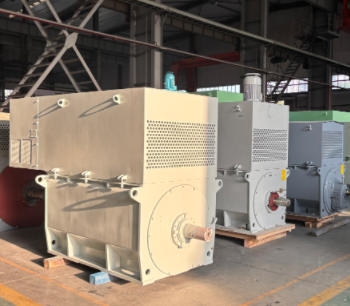
Compared to B3-mounted motors, B35 motors are not only secured via their base feet but must also be fixed to the driven equipment through a flange on the end cover. This arrangement ensures and constrains the alignment between the motor shaft extension and the equipment interface in both horizontal and vertical directions. As a result, the interface between the motor’s flange cover and the driven equipment forms a relatively enclosed cavity. The bearing at the motor’s shaft extension end becomes thermally insulated from the external environment. Specifically, the heat generated by the bearing system cannot be exchanged directly with the surrounding air.
This effect is particularly pronounced—and has a greater impact on the temperature of the shaft-end bearing—in applications where the driven equipment itself operates at elevated temperatures. However, during motor testing, the test environment rarely replicates the motor’s actual operating conditions, whether in terms of mounting configuration or ambient environment. Consequently, data measured during factory testing often deviates significantly from the motor’s actual field performance. This discrepancy is especially critical in high-ambient-temperature environments, where it frequently leads to a range of bearing system issues.
B35-Mounted Motors: Structures for Online Lubricant Injection and Drainage
For most motors, the bearing system requires a structure that allows lubricant to be injected and drained without shutting down the motor. This lubricant management system typically has two configurations: one where the ports are located on the bearing cover, and another where they are on the end cover.
For B3-mounted motors, as long as there is no physical interference with the driven equipment, lubricant injection and drainage can be performed without issue—regardless of whether the ports are on the end cover or the bearing cover.
For B35-mounted motors, however, it is critical to carefully consider the practical feasibility and accessibility of the lubricant management structure after the motor has been interfaced with the driven equipment.
Analyses of actual motor failure incidents have revealed that some motors are equipped only with lubricant injection ports, lacking corresponding drainage ports. While this may not pose a significant issue for small motors, it can become a serious problem for larger motors—particularly those requiring frequent grease replenishment. In such cases, excess grease may migrate into the motor’s internal cavity, potentially triggering a cascade of other quality-related issues.
Post time: Apr-28-2026