

Industry News
-

Driven by Decarbonization and Smart Manufacturing: High-Voltage VFDs Power Heavy Industry Beyond Energy Bottlenecks
[Industry Insight] Amid the global push for industrial decarbonization and digital transformation, high-voltage motors—the primary power source in heavy industry—directly dictate operational costs and sustainability milestones. High-Voltage Variable Frequency Drives (HV VFDs) are rapidl...Read More -

Difference Between Increased Safety and Flameproof Terminal Boxes for Explosion-Proof Electric Motors
Terminal boxes are core safety components of explosion-proof electric motors, determining whether motor wiring sections can reliably avoid igniting flammable gas and dust in hazardous industrial environments. The two mainstream designs shown in engineering drawings are increased safety (Ex eb, EA...Read More -

High-Voltage Motor Safety Grounding and Short-Circuit Withstand Requirements (Covering Terminal Box Short-Circuit Withstand and Neutral Grounding Practices)
1. Introduction In medium and high-voltage induction motor systems, safety performance is not determined only by electrical parameters such as rated power or insulation level. Mechanical integrity under fault conditions and system grounding configuration are equally critical. Two parameters fre...Read More -
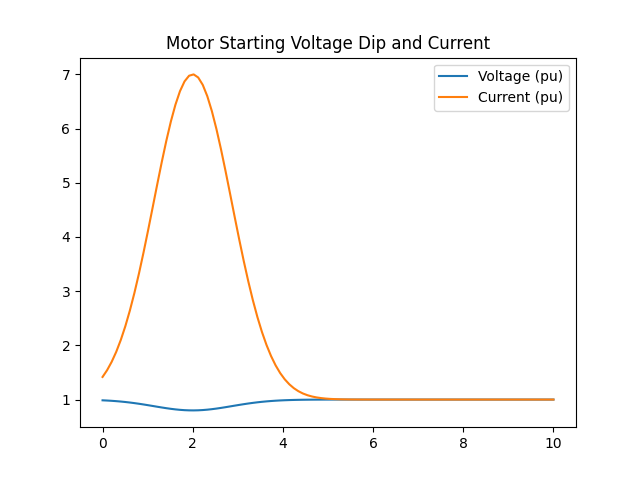
Motor Starting Parameters Explained: 5.5 pu vs 6.5 pu Locked Rotor Current
Recent inquiries from customers, system integrators, and overseas project designers have highlighted recurring questions regarding induction motor starting performance, particularly the interpretation and selection of locked rotor current levels such as 5.5 pu and 6.5 pu. In many technical speci...Read More -

How High Vibration of Load Equipment Damages Motors & Motor Bearings: Causes, Hazards & Solutions
High vibration transmitted from fans, crushers, pumps and other industrial loads is a common hidden fault for industrial motors. Most plant maintenance teams only monitor motor temperature and current, ignoring continuous vibration from connected loads. Long-term abnormal vibration mainly damages...Read More -

Industrial Safety Upgrade: The “One-Letter” Difference Between Ex db and Ex db eb Explosion-Proof Motors
In industries like oil, gas, chemical, and pharmaceuticals where explosive gas risks are a daily reality, explosion-proof motors act as the vital heart of safe operations. However, when procurement and technical teams look at explosion-proof markings, a difference of just one or two letters can s...Read More -

Critical Explosion‑Proof Motor Selection: Class I Div 2 Group B Certification Difference in North American Standard
A client from USA recently inquired about replacing existing TECO explosion proof motors used in chemical & energy projects. The original NEMA motor adopted strict North American hazardous area standards: Class I, Div 2, Groups B, C & D Class I, Zone 2, Groups IIB+H₂, IIB & IIA The ...Read More -

Ensure Stable Operation: Voltage Fluctuation Adaptability Test for Three-Phase Asynchronous Motors
Voltage fluctuation is a common power anomaly in industrial production, caused by factors such as lightning strikes, short circuits, startup of high-power equipment, and grid switching. Such fluctuations may lead to abnormal operation, failure shutdown, or even damage of three-phase asynchrono...Read More -

Asynchronous Motors Replace Slip Ring Motors: Driving Efficient Upgrade of Industrial Production
In the context of the global industrial transformation towards high efficiency, energy conservation and cost reduction, asynchronous motors have gradually replaced traditional slip ring motors in various industrial fields, becoming the core power support for enterprise production and up...Read More -

Why High-Power Motors Are Designed for High Voltage?
In heavy industry, high-power motors (typically 200kW and above) are almost exclusively engineered as high-voltage (HV) motors—operating at 3kV, 6kV, or 10kV—rather than low-voltage (LV) 380V/660V systems. This design choice is rooted in fundamental electrical principles and delivers overwhelming...Read More -

When 12 mm/s Vibration Meets High-Voltage Motor Bearings
Why load-side vibration exceeds motor limits — and how we address it transparently In a recent inquiry for a high-voltage motor driving a vacuum pump via a rigid coupling, a professional customer raised a critical concern: Could the pump’s high vibration damage the motor bearings? After reviewi...Read More -

The Bearing Philosophy of High-Voltage Motors: Why One End Must Be Fixed and the Other Free
At the heart of industrial production, high-voltage motors serve as the critical power source driving large fans, compressors, and crushers. For these “hearts” of the operation, stability and reliability are paramount. Observant individuals might notice an intriguing design ...Read More