

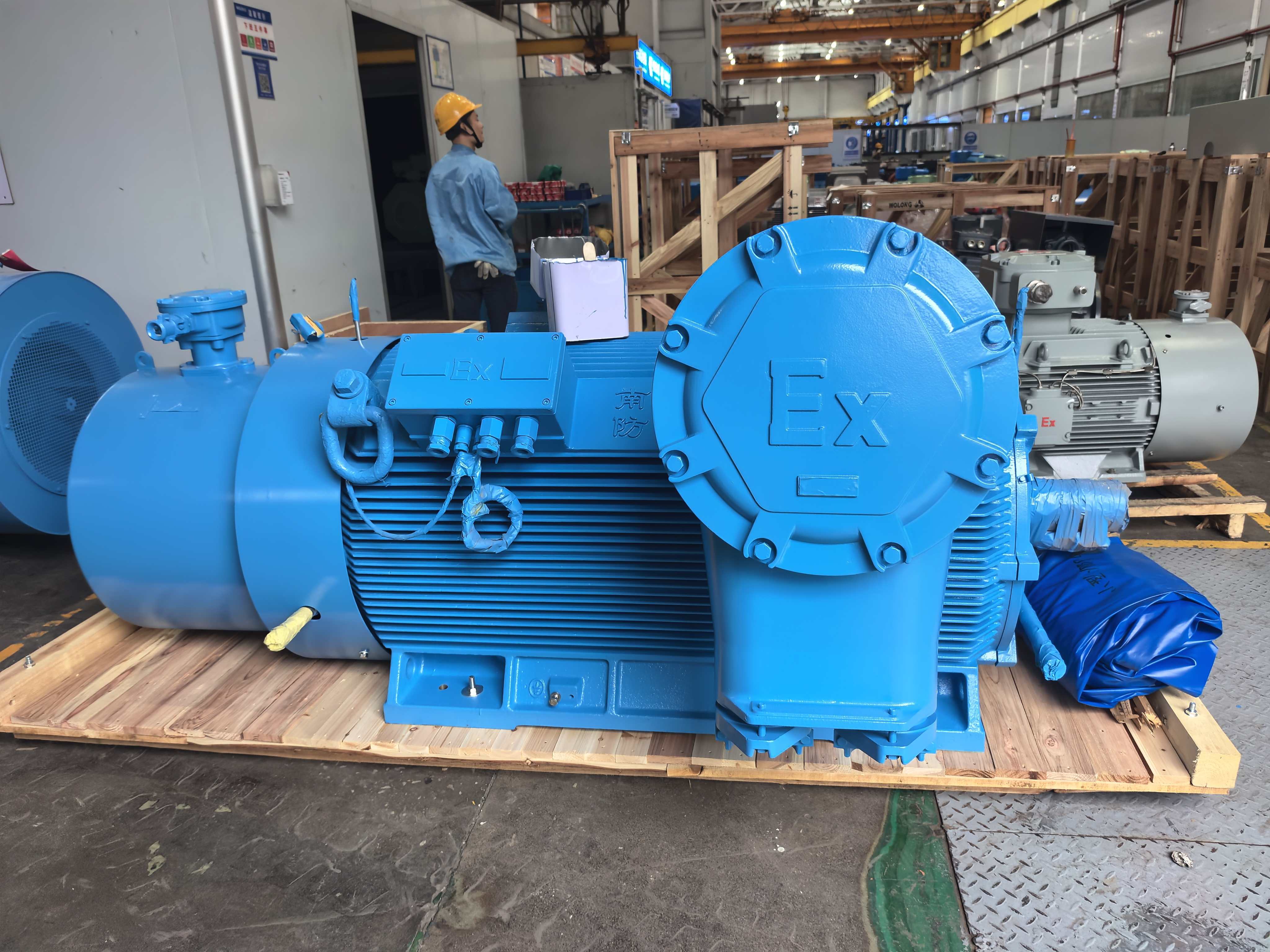
As variable frequency drives become commonplace in industrial settings, electric motors are facing a new “invisible killer”—high-frequency pulse currents. In response to this challenge, the State Administration for Market Regulation officially released the new version of the motor performance standard, GB/T 755-2025, “Rotating electrical machines—Rating and performance,” in August 2025. This standard is scheduled to take effect on February 1, 2026. The transition from the old to the new will compel the motor industry to undergo a comprehensive technological upgrade.
This isn’t just a change in numbers; it’s a significant enhancement of the motor’s “immune system.”
New Challenges Brought by the Prevalence of VFDs
In the past (under GB/T 755-2019), motors primarily operated on traditional power grids, where the main tests were for voltage withstand and heat resistance. However, with the push for energy-saving retrofits, the high-voltage pulses generated by VFDs act like continuous “electric shocks,” gradually wearing down motor insulation.
Addressing this critical issue, the 2025 version introduces, for the first time, an “Impulse Voltage Insulation Class” assessment for inverter-fed motors. This means that starting in 2026, merely labeling a motor as “suitable for VFD use” won’t be sufficient. Manufacturers must demonstrate how many voltage impulses their product can withstand. This is favorable for high-end motor manufacturers using refined insulation techniques but acts as a barrier to entry for technologically outdated, lower-quality products.
New Rules: Dedicated “Check-up Sheets” for Permanent Magnet Motors
Another significant change concerns emerging technologies. Permanent magnet motors and synchronous reluctance motors have gained popularity recently due to their high efficiency. However, the 2019 version of the standard lacked specific test items for them. The new standard adds specific routine tests for these motor types, effectively providing these “new species” with their own dedicated “check-up sheets” and filling a long-standing gap where standards lagged behind technology.
Furthermore, the new standard imposes more detailed requirements regarding creepage distances in high-altitude environments and shaft voltage measurements. Industry experts point out that GB/T 755-2025 is not merely an alignment with the international standard (IEC 60034-1:2022) but also a concrete step towards implementing high-quality transformation in Chinese manufacturing. For motor procurement managers and user companies, after February 2026, when selecting a motor, it might be wise to ask not just about power and speed, but also: Does it comply with the new national standard?
Post time: Mar-20-2026