

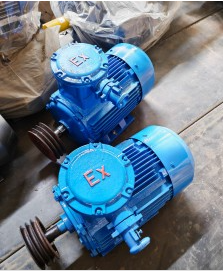
I. Preventing the Propagation of Explosions
This is the most fundamental and critical function of a flameproof junction box. In environments where flammable or explosive gases and dusts are present—such as petrochemical plants, underground coal mines, and gas stations—electrical equipment may generate sparks, arcs, or dangerously high temperatures inside the junction box, whether under normal operation or during a fault condition. If an internal short circuit or poor contact occurs within a standard junction box, the resulting sparks could ignite combustible materials in the surrounding environment, leading to a catastrophic disaster. The flameproof junction box resolves this issue through its unique design. Its enclosure is constructed from thick-walled cast iron, cast steel, or high-strength aluminum alloy, enabling it to withstand the immense shock pressure generated by an internal explosion without rupturing. More importantly, the precision-machined interface between the box body and the lid—known as the “flameproof joint”—forms a gap channel that is sufficiently long and narrow. When an internal explosion occurs, the high-temperature, high-pressure flames and gases are forced outward through this channel; as they traverse this path, their heat is thoroughly absorbed by the metal enclosure, causing their temperature to drop drastically. Consequently, by the time they exit the box, they are no longer capable of igniting the flammable or explosive gases in the external environment. Simply put, while a standard junction box aims to “prevent danger from entering,” a flameproof junction box aims to “prevent danger from escaping.”
II. Ensuring the Safety of Personnel and Equipment
Personnel working in hazardous locations face the constant threat of potential gas or dust explosions. The use of flameproof junction boxes eliminates—at the source—the possibility of electrical equipment acting as an ignition source. Rather than relying on seals to isolate hazards from the outside—a method always subject to the risk of seal failure—these boxes employ a design philosophy based on the premise that “an internal explosion is not a problem.” This ensures that even under the most severe fault conditions, hazards will not propagate into the external environment. This safety-redundant design provides vital life-safety protection for field operators while simultaneously preventing fires or explosions caused by equipment malfunctions, thereby safeguarding expensive production facilities from damage.
III. Facilitating Reliable Electrical Connections
Beyond its safety functions, the fundamental purpose of a flameproof junction box is to facilitate the entry, branching, or connection of electrical cables. Its internal space is intelligently designed to accommodate terminal blocks, enabling operators to perform standardized, orderly wiring procedures. At the same time, it features a high level of protection (typically IP65 or higher), preventing the ingress of dust and moisture and ensuring the long-term stability and reliability of electrical connections in harsh environments.
Post time: Mar-23-2026